Restaurant Website Design, with Examples
Let them see your menu before they decide where to eat.
A website with your menu, your hours and online ordering, that loads fast on the phone of someone who’s hungry. I work with small businesses in Brownsville, Texas.
Why your restaurant needs a website
Before trying a new restaurant, 85% of American diners look at the menu online and 80% check the restaurant’s website, while 64% search for it on Google (TouchBistro, 2023). A restaurant without its menu online gets skipped before anyone tastes the food.
And 72% would rather order takeout directly from the restaurant than through a third-party app (TouchBistro, 2023). That matters, because DoorDash charges 15% to 30% commission on each delivery order (DoorDash, 2026). Your own website lets diners order straight from you and keeps that money in your register.
What goes on your restaurant website
What a hungry person wants to see in seconds, and what someone planning a celebration needs to book.
Your menu with prices
All your dishes organized by section, each with its price and a short description. When you change a dish or a price, the website changes too.
Online ordering
A button to order directly from your restaurant, without going through a delivery app. Online payment too, if you want it.
Reservations
For groups, birthdays and office parties, with a button to book a table.
Photos of the food and the place
People eat with their eyes first: a good photo sells more than any description.
Opening hours
When you open, what time the lunch specials run and which days you close early.
Reviews from your guests
Your Google reviews, right on your website. What other diners say convinces people more than any ad.
Map and parking
How to get there, whether there’s parking and whether there’s a play area for kids: the things that decide a family night out.
How to show up on Google when people search for a restaurant
For Google to show your restaurant when people are looking for somewhere to eat, six things matter most:
A website of your own. It’s the foundation for everything else: Google links it to your Business Profile and reads your menu and hours there. Without one, you depend only on your profile and on delivery apps.
A Google Business Profile with your menu and photos. Your cuisine as the category (“Steak house”, “Family restaurant”…), a link to the menu on your website and plenty of photos of your dishes. It’s what people see when they search “restaurants near me”.
Accurate opening hours. Lots of people search “restaurants open now”. If Google thinks you’re closed, you don’t show up; and if it thinks you’re open when you’re not, you lose the customer.
A menu in text, not in a photo. Google understands a menu written as text much better than a photo or a PDF. Written on your website, every dish is one more search you can show up for: “brisket”, “lunch specials”, “fajitas”.
Reviews. Ask the tables that leave happy. A QR code on the table or on the check makes it easy.
The same name, address and phone number everywhere. On your website, on Google, on Instagram and on Facebook. If they don’t match, Google isn’t sure which one is right.
Available designs
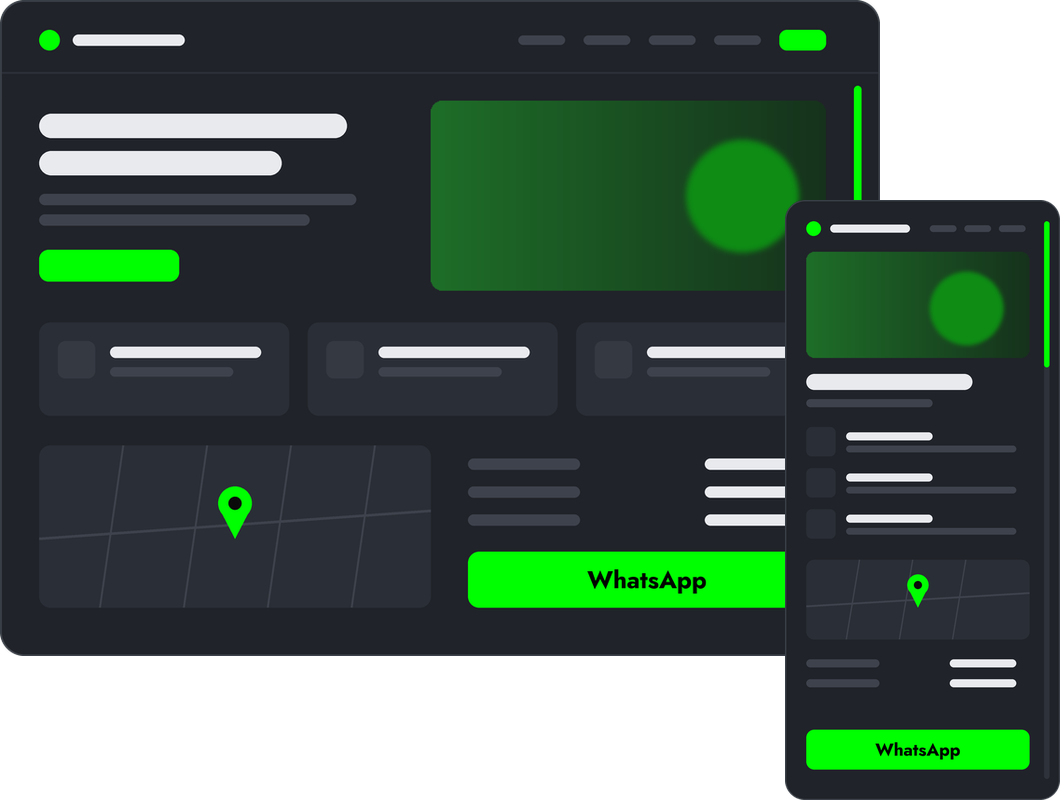
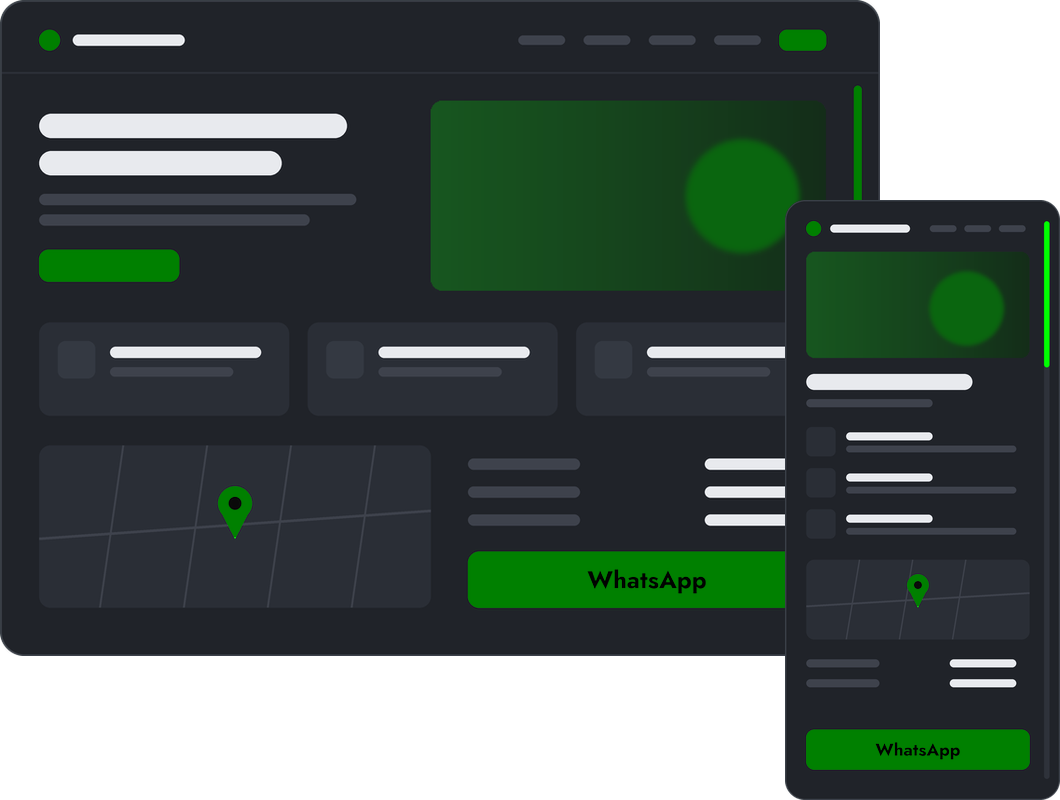
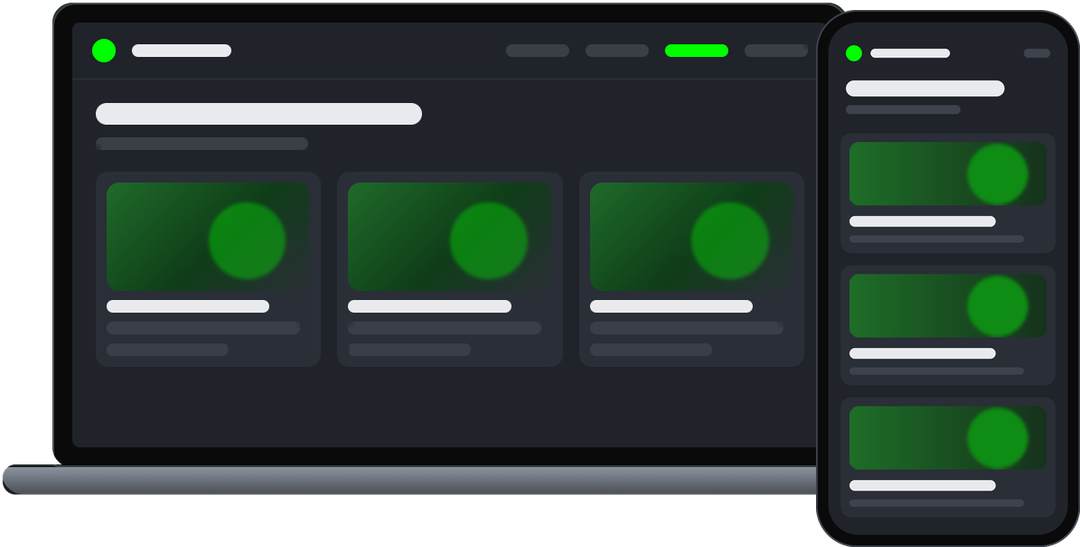
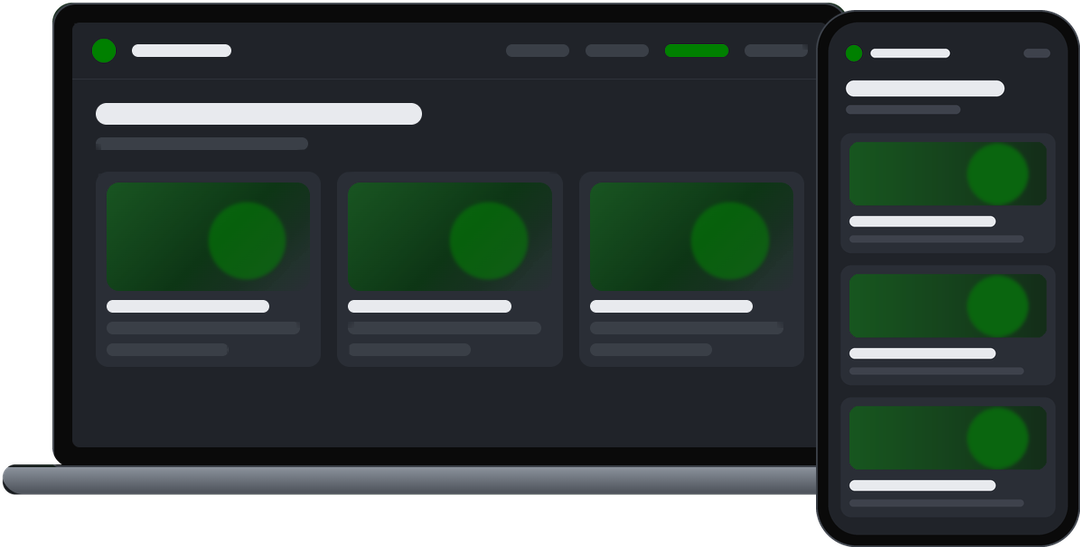
This website is built specifically around the services and needs of a restaurant. It has what the restaurant offers (wood-fire meats, lunch specials, delivery, parties and events, drinks and cocktails, and a family-friendly place), adjusted to the services you offer, the full menu with prices by section, the opening hours with a box to book a table for a celebration, the people behind the grill, guest reviews, the address with a map, and the questions people ask most, like whether they deliver or whether you need a reservation. It also has a daily menu: it opens on today’s lunch, with the price and a button to order it for delivery, and the tabs show the rest of the week.
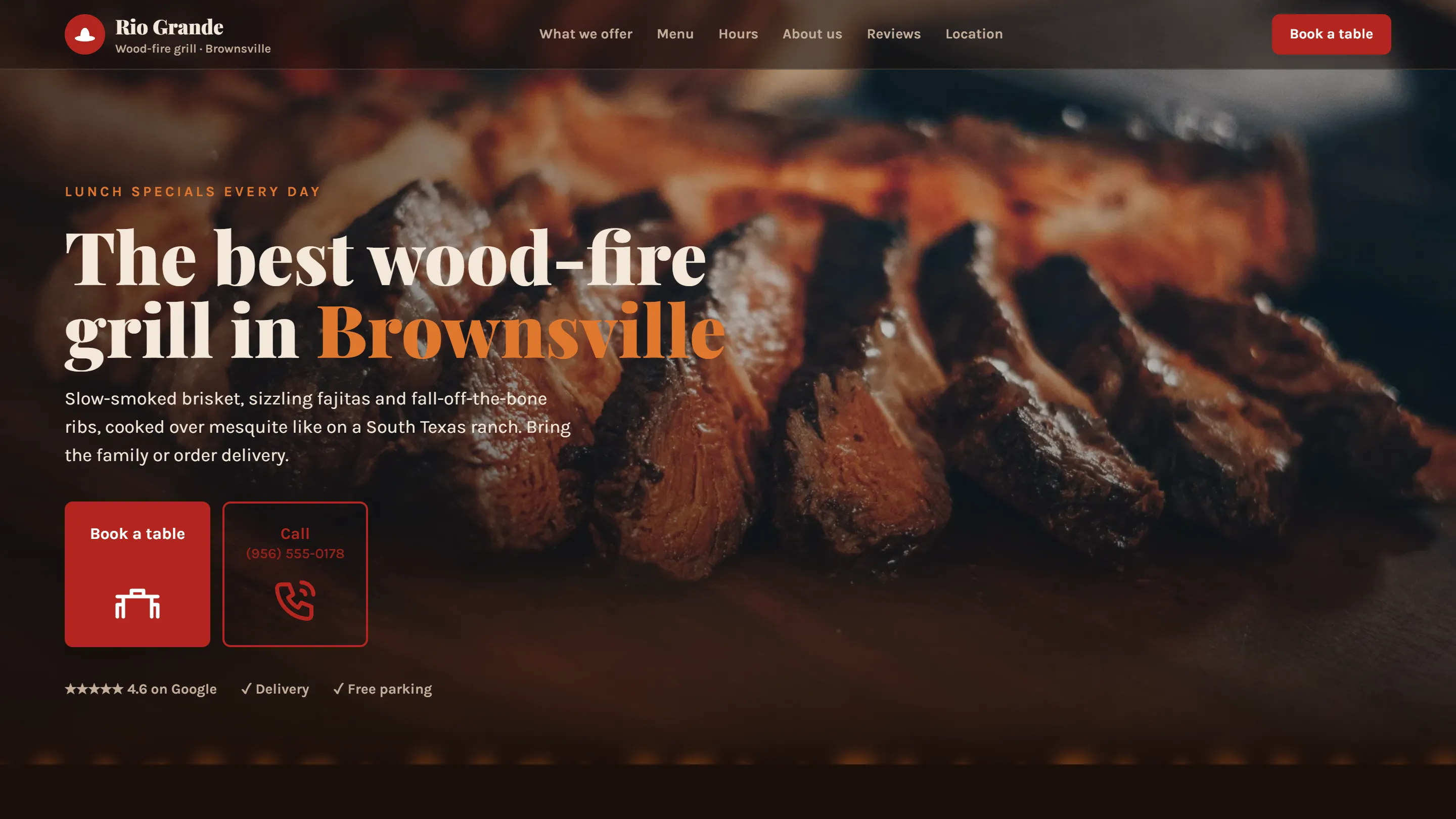
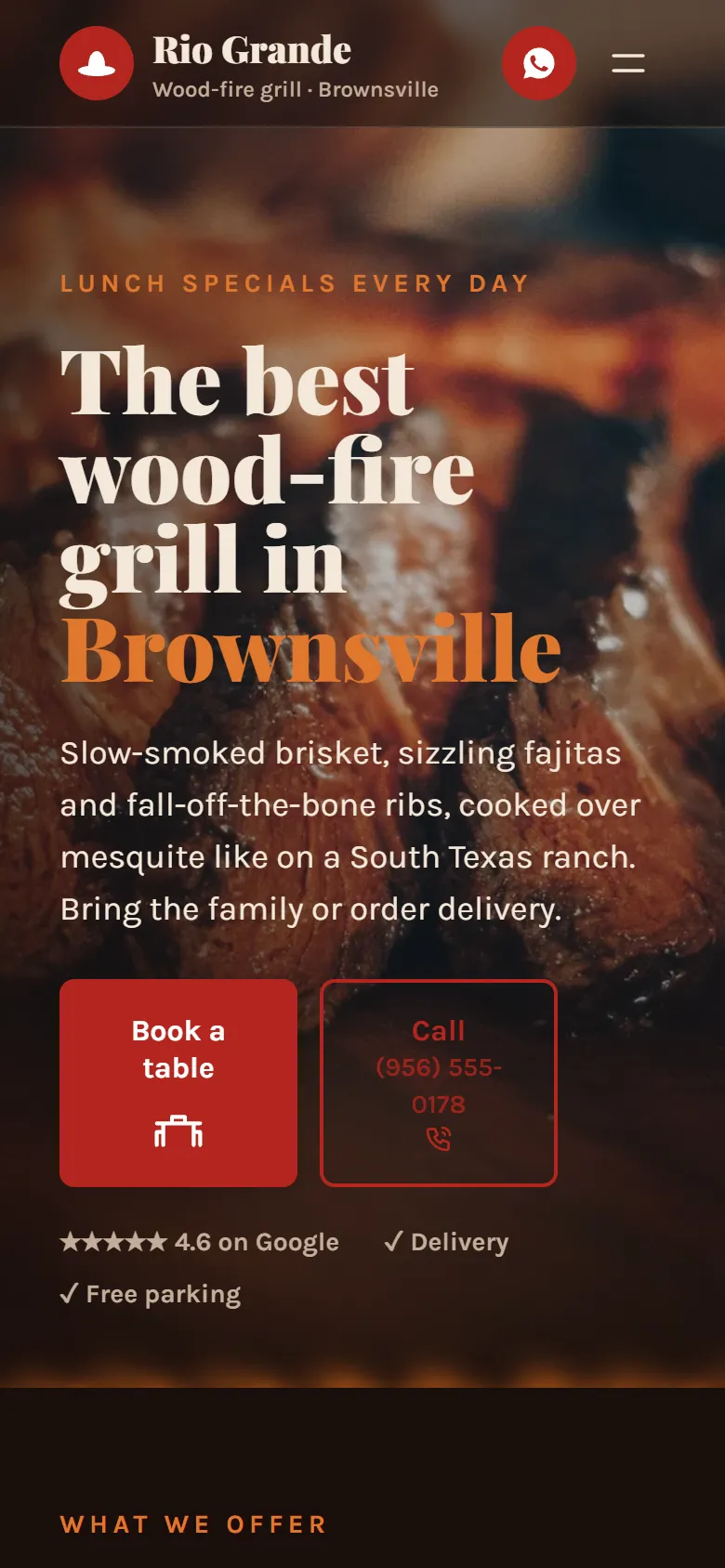
I build three types of websites, and in the example you can switch between them with the bar at the top. Which one suits you depends on your business: the size of your restaurant, whether you host events and how many delivery orders you send out.
One page
For a small restaurant or a lunch spot: your menu, your hours and a button to order, all on one page.
See it →With a blog
For a restaurant that hosts events or has a story to tell about its food: pages for parties and articles about your dishes that bring people in from Google.
See it →With payments
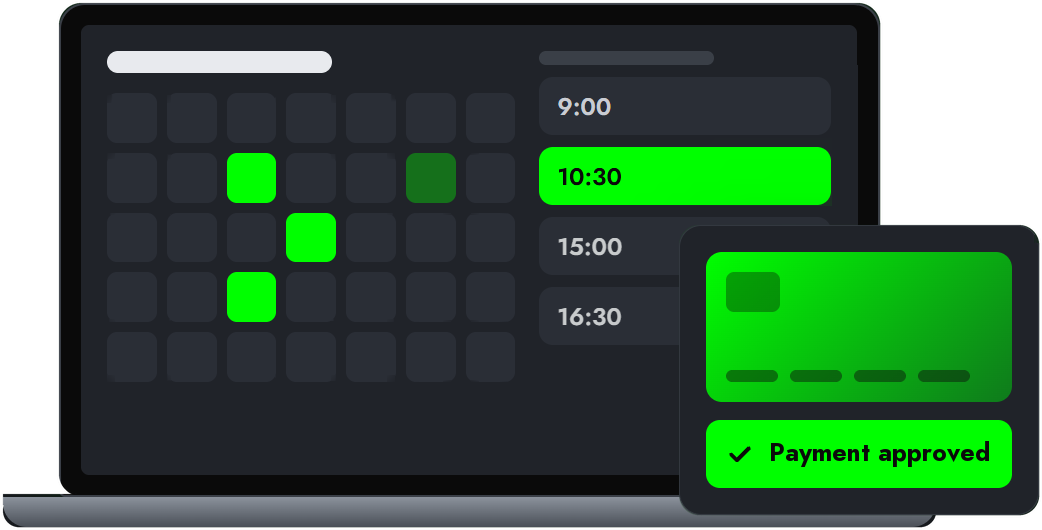
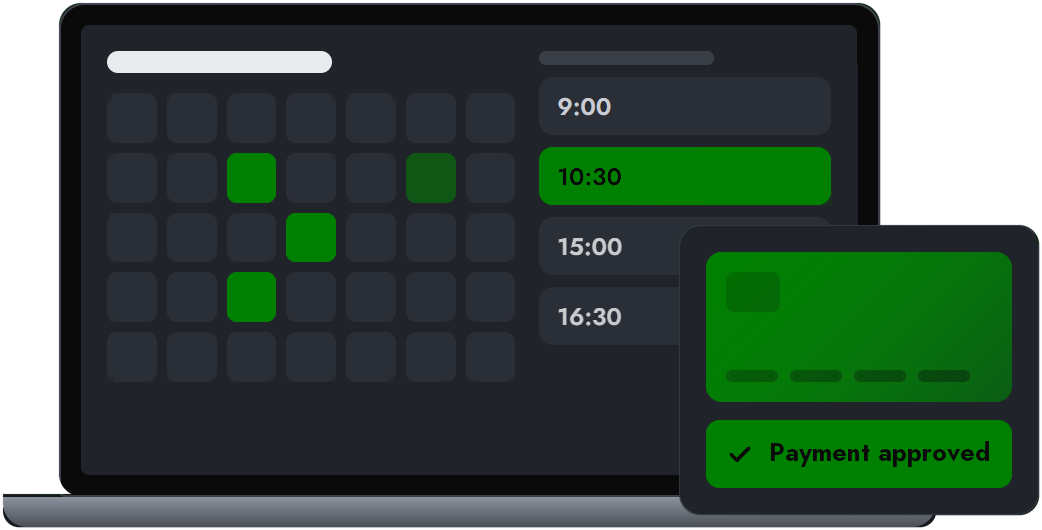
If you send out a lot of delivery orders: ordering with online payment, straight to your restaurant, without depending on an app.
See it →
FAQ
How do I promote a restaurant on Google?
With a complete Google Business Profile (photos of your dishes, accurate hours and a link to your menu) and a website where the menu is written out with its prices. That way you show up when people search for a dish or a type of food, not just your name. And recent reviews from your customers help you appear among the best rated.
How do I promote a restaurant on social media?
By showing the food as it really is: short videos of a dish coming out of the kitchen, the lunch special of the day, your customers’ celebrations (with their permission). And in every post, a link to your website with the menu, the hours and a button to order, so the craving turns into an order.
Can my website work as a digital menu with a QR code?
Yes. You can have a QR code that opens your website right on the menu. The advantage over a PDF is that when you change a price, it changes at the table and on Google at the same time.
Is a free website good enough for my restaurant?
It can work to get started, but it has its limits: free website builders usually show their own branding and don’t let you use your own domain. It’s worth comparing it with a professional website to see which one suits your business.
When will I see results on Google?
Once we publish your website, it can show up on Google, but Google takes time to trust a new site and rank it higher. According to Google, it usually starts to show 4 to 12 months after it goes live.
Other services
- Google Maps, social media and directoriesGoogle Business ProfileI set up your business fully on Google Maps, with the same details on social media and directories.See what’s included
- One-page websiteSmall business websiteYour whole business on one page, ready for Google.See what’s included
- Several pages and a blogWebsite with blogA page for each service and a new article every month.See what’s included
- Pages, blog, payments and bookingWebsite to sell onlineLet customers book and pay in one click.See what’s included
From the blog
Who builds your website

I'm Drago Herrera, a software developer trained in Fine Arts. Every website is made to measure, with great care for both aesthetic and functional detail. They are fast websites with a cutting-edge style that never gives up functionality or speed, the core values of the brand.
More about me →Let’s talk
Write to me and I will tell you how your business website would look.